Print News
9th September 2020
LO: To explore the purpose and processes of the printed news industry.
In broadsheet newspapers the type face is of a serif font. This font has connotations of being a traditional font, the font is normally used in formal writing due to these connotations. Also the font is known as being trustworthy, so if you see this typeface normally you can trust the information included. The paper is normally quite plain, there is a lack of colour, there is normally only one image on the front page. There are never any funny stories used on these type of papers because that is normally a tabloid connotation.
The tabloid paper below, known as The Sun, uses bright colours to catch the attention of the reader. There tends to be very bold typefaces used, this is to catch the attention of the reader. It tends to be bold, the funny stories appeal to the target audience, the target audience for tabloid papers is of a much younger and lower demographic than a broadsheet. The audience tends to have less education and are more willing to read material which isn't necessarily factual.
Industries
Why are newspapers so expensive to produce?
They require a large amounts of material.
They have to employ highly trained staff.
How has technology changed the traditional approach?
Printed in colour.
Internet, can be used to spread news very quickly and effectively.
Distribution
Why are they so expensive to distribute?
Have to be physically transported.
Need to be delivered very early in the mornings.
How would you lessen this cost?
Print locally.
Online news.
Marketing
How do they promote their papers?
Advertising - TV, social media, sister papers.
Exclusives.
Snergy deals with other companies.
Circulation
Number of copies distributed, not sold.
Ownership
Refers to who financially supports and produces the paper.
In the UK there are 3 ownership models;
- Media Barons, Rupert Murdoch
- Trusts - a legal arrangement that transfers the funds from the owner to the 'trustee' to manage and control the running of the paper
- Cross Media - global institutions that own numerous news outlets.
Newspaper ownership in the UK has become increasingly concentrated, and therefore less diverse. This is because the industry is run by just 7 companies. 60% of the news market share is owned by just 2 of those companies. News UK and DMG Media.
Economic models
Circulation Sales:
14.3 million people read a paper daily
81% of a papers revenue comes from print sales.
Advertising:
Cost of an ad in a paper can be £30k+
The print news is having a financial crisis at the moment, sales keep falling due to the increase of online news.
Theresa May announced a review of the news industry in February 2018 to ensure quality news and journalism
Funding strategies include:
Public or government subsides
Online payments
greater use of freelance agencies.
Technological developments.
1980's - computers, printers.
This now meant homeowners who had this technology can now print and write their own information.
1990's - Internet
This now meant people can be looking at and spreading news more quickly via the internet. Currently we rely on the internet so much, that most people would not be able to work without it. Most people use the internet for looking at the latest and breaking news.
2000's - broadband, smartphones and tablets, HD digital cameras and apps such as news apps for the latest breaking news. This now allows people to quickly get notifications about breaking news in the local area as well as globally.
Daily Mail
Ownership - Daily Mail and General Trust, Jonathan Harmsworth. It is based around a subscription model, which is how they earn their money.
Circulation - The Daily Mail had the highest sales of the papers which published, with a circulation of 945,000, down from 1.13 million in March.
They reach 70% of the UK population.
Advertising Costs - £300 - £3,000,000+, depending on size and colour.

Sales figures for the last 5 years -

Online Website -
https://www.dailymail.co.uk/home/index.html
funded by subscription or adverts.
The Daily Mail was founded in 1896 by Alfred Harmsworth, In 1902, its circulation exceeded one million, rivaling the New York World and the New York Journal for the top circulating newspapers. The Mail was originally a broadsheet but switched to a compact format on 3 May 1971, the 75th anniversary of its founding. On this date it also absorbed the Daily Sketch, which had been published as a Tabloid by the same company. Circulation figures according to the Audit Bureau of Circulations in February 2020 show gross daily sales of 1,134,184 for the Daily Mail. According to a December 2004 survey, 53% of Daily Mail readers voted for the Conservative Party, compared to 21% for Labour and 17% for the Liberal Democrats. The main concern of Rothermere, who is the current main shareholder, is that the circulation should be maintained. He testified before a House of Lords select committee that "we need to allow editors the freedom to edit", and therefore the newspaper's editor was free to decide editorial policy, including its political allegiance. The Mail has been edited by Geordie Greig since September 2018, following the retirement of Paul Dacre who edited the paper since 1992.
DMGT has three key strategic priorities: improving operational execution, increasing portfolio focus and maintaining financial flexibility. This strategy, combined with a clear capital allocation framework, aims to deliver sustainable returns over the long-term.
The Guardian
Ownership - Guardian Media Group, which is a company who, the more they earn the better they get. If they have a drop in sales this can become a real problem. Scott Trust. - Not-for-profit, which means decrease in sales does not affect the paper, to avoid commercial influence. Lower sales does result to lower advertising.
Circulation - The Guardian recorded a year-on-year circulation drop of 5 per cent to an average of 128,265 copies in August.
Advertising Costs -

Sale Figures - on graphs above.
The Guardian is funded mainly by the adverts that are placed on their website and on their print papers too.
The paper was founded in Manchester in 1821 as the weekly Manchester Guardian The paper is owned by the Scott Trust, which also owns the Guardian Media Group.
The Guardian is a British daily newspaper. It was founded in Manchester in 1821 as the weekly Manchester Guardian, but became a daily paper after the British government lifted its Stamp Tax on newspapers in 1855. The paper later changed its name to the Guardian in 1959. Along with its sister papers The Observer and The Guardian Weekly, The Guardian is part of the Guardian Media Group, owned by the Scott Trust. The trust was created in 1936 to "secure the financial and editorial independence of The Guardian in perpetuity and to safeguard the journalistic freedom and liberal values of The Guardian free from commercial or political interference". The trust was converted into a limited company in 2008, with a constitution written so as to maintain for The Guardian the same protections as were built into the structure of the Scott Trust by its creators. Profits are reinvested in journalism rather than distributed to owners or shareholders.
The Scott Trust describes one of its "core purposes" to be "to secure the financial and editorial independence of the Guardian in perpetuity: as a quality national newspaper without party affiliation; remaining faithful to its liberal tradition".
Print News
16th September 2020
LO: To explore the news values, bias and regulation of printed news.
Press agencies gather facts and sells these facts to newspapers, the newspaper then decides to change or twist or choose not to report a certain story because it reflects badly on their ideologies. The agency identify the key facts of major events which make the newspapers buy the story off of them.
Gatekeeping
The editor acts as the gatekeeper, they filter and select stories based on the importance and appeal. As part of this editors have to practise protective coverage. This is withholding certain information on the grounds that it would be harmful to the public or useful to powerful people.
News Values
Guidelines used to identify which news is considered most valuable, appealing and trustworthy.
These are 12 of the ‘most significant’ news values from the work of Galtung and Ruge:
1. Frequency - short-term events like murders are preferred over long-term developments like a famine.
2. Threshold - basically the size of an event indicates his importance.
3. Unambiguity - events do not have to be simple but they must be accessible to the public - i.e. simplified by the media.
4. Meaningfulness - divided into two categories after Galtung and Ruge’s ‘Familiarity’:
a) Cultural proximity, in which the event agrees with the outlook of a specific culture;
b) Relevance - where events will be reported and discussed if they seem to have an impact on the ‘home’ culture, especially a threat.
5. Consonance - or ‘correspondence’ where the familiar is more likely to be thought than the unfamiliar.
6. Unexpectedness - or ‘surprise’ where it is the rarity of an event which leads to its circulation in the public domain; Dutton notes that the ‘newness’ of the event is usually processed through a familiar context. It has to work with 4 and 5.
7. Continuity - once a story achieves importance will be continued to be covered for some time
8. Composition - this is to provide a sense of balance, gloomy news with good news, foreign with domestic.
9. Reference to elite nations - events are more likely to be reported if they occur in the developed world; the threshold system would apply for developing countries’ events to be reported
10. Reference to elite persons - the famous and the powerful are more newsworthy than ordinary people
11. Personalisation - events are seen as actions of people as individuals; an institution may be personalised by reference to a prominent person within that organisation
12. Negativity - bad news is good for the press and TV news; the threshold is much lower for bad news than for good news.
This front cover uses the values Unexpectedness, Covid-19 took the world by surprise, this was 'new news'.
This front cover uses the values, reference to elite persons. As the front cover is designated to the royals.
The Daily Mail is right wing, which is more Conservative and The Guardian is left wing which is very liberal, so supports the labour party and the Lib Dems.
Many newspapers are controlled by the same people with similar views, which is reflected in the paper that they produce. As most of the news companies are owned by Conservative supporting people this means most of the news we read is from views and ideologies from a conservative standpoint.
Daily Mirror -
Left wing - the paper is criticising the PM.
Image - The image is comedic and very insulting.
Headline - The word 'lies' is repeated multiple times, reinforcing the idea that the PM lies to the people and the advert for the Labour party in the top right corner reinforces the idea that the Labour party is 'For the Many, Not the Few'.
Small Text in the bottom right, says 'FACE OF THE YEAR, Today's your chance to get rid of Mrs May. This reinforces their political standpoint and shows that they do not want the Tories back in power for the next 5 years.
Daily Mail -
Right Wing - Praising the Conservative party and their leader Mrs May.
Image - This image has been chosen to reinforce the papers political standpoint, the pose shows that she is not wanting the praise but is happily accepting it. With many of her supporters in the background this again reinforces the ideology that this is the correct party to vote for.
Headline - The word 'boost' has been used, this word has positive connotations attached to it, which means that people reading this headline will be reading it in a positive attitude. Furthermore increasing the popularity of the Conservative party.
Subheading reads 'Corbyn will tax your work, your garden, your home and your inheritance.' This creates a negative stigma which will stay with the reader and use this to justify their standpoint and political views because many people will not want to be taxed more than they already are.
23rd September 2020
Semiology
Denotations can signify connotations, associated meanings for the same sign.
Denotations and connotations are organised into myths.
Myths create an ideological meaning and help ideology feel natural, real and acceptable.
Structuralism
This is the study of hidden rules that shape a structure to communicate ideology and myths.
We understand the world and our place within it based on binary oppositions.
eg. Hero and the villain in politics, good Vs bad.
LO: To explore the regulation of printed news
Regulation (Livingstone and Lunt)
There are 2 main arguments for and against the regulation of printing press.
- FOR - The industry has too much political power and influence over the British public.
- Against - If there is regulation then the news will all have the same opinion and there would be no longer a free press.
Regulation is concerned with maintaining the need for a free press and the function of the Fourth Estate.
Recent events have put regulation at the top of the political agenda. In light of recent debates, regualtion in the UK focuses on
- News content and information
- Ownership and competition laws
The British press is self-regulated.
2 new regulatory bodies were established.
Independent Press Standards Organisation (IPSO)
- Holds newspapers to account
- Protects the rights of the individual
- Upholds the standards of journalism
- Maintains the freedom of the press
However it is funded by the members such as The Mail, and newspapers can opt out which means The Guardian cannot be investigated by the IPSO.
Independent Monitor for the Press (IMPRESS)
- Funded by the IPRT, which means it is commercially independent from the news industry.
- First of its kind for the UK, but not supported by many editors as it is seen by an attempt from the government to control the freedom of the press.
In 2012, OFCOM recomended reviews of the mergers between cross-media companies and news owners in the UK every 4/5 years
Currently, plurality and competion is regualted by the 20/20 rule:
Which prevents anyone who runs a newspaper group with a national market share of 20% or more, from controlling licences to provide ITV or C5TV news.
Mock Question 3 DIRT
Explain the economic contexts, including commercial and not-for-profit funding, affect the distribution of newspapers. Refer to the Guardian and the Daily Mail to support your answer. 10
The Guardian and the Daily Mail in the past 5 years have been dramatically declining in sales. Due to this both papers have had to make changes in the way they do things. The Guardian is a Scott Trust. Which means they are a Not-for-profit organisation, which means decrease in sales does not affect the paper as much, however they do not want to be having a loss in revenue, this is because it would be costing more to print and write the paper than what they get back, so they have had to do something about it. Lower sales results to lower advertising. Which also mean less revenue for the paper. To combat this the Guardian have decided to decrease the size of the older less modern broadsheets, not only these papers were an inconvenience but it also costed a lot to print. Cutting down on the paper used has saved them money, other ways they have tried to boost revenue is introduce a subscription model, they now accept contributions as well. The online paper has also increased revenue, as its quicker and easier to find the news more companies want to advertise on the website. So even though there are less sales the paper has managed to increase and slow down the decrease in revenue. Decreasing their cost has also helped increase the overall revenue. The Guardian is an objective newspaper, in journalism this aims to help the audience make up their own mind about a story, providing the facts alone and then letting audiences interpret those on their own. Objective reporting is meant to portray issues and events in a neutral and unbiased manner, regardless of the writer's opinion or personal beliefs. Which doesn't show the structuralism theory that many newspapers do follow, they present their own political views as the correct view, thus creating a good vs bad approach to politics, showing the opposite party as bad.
The Daily Mail is a company, they are a commercial business, they own by the Daily Mail paper alone 20% of the news market, which is the biggest chunk from any single paper. The paper is owned by the Rothmore family who are media barons. They want the profit off of the paper, a decrease in profit means that the paper is in dyer trouble of being shut down. However to increase profit the paper has also cut costs, such as closing down one of its factories. As print papers have been declining in sales they have moved to an online version of the paper, which relies on adverts for the profit. The Daily Mail is sensational which, in journalism and more specifically, the mass media, is a type of editorial tactic. Events and topics in news stories are selected and worded to excite the greatest number of readers and viewers because of this it does create a good vs bad storyline, they create stories which excite the reader, to do this effectively the paper needs to agree with the political views of the Target Audience.
However a similarity that both of the papers have is that they have both increased the price of the paper, this is to insure that the distribution of the papers isn't effected by the cost cuts that they would have to be more drastic about because of the decline in sales and thus the circulation of the papers.
Target =
- Politics of each paper, sensational vs objective resulting in more widespread distribution of the Daily Mail
- Cover price increase for both
- Theory applied to each example
Curran and seaton: Power and media industries
- Patterns of ownership and control are important in how media functions
- Media industries are capitalist and aim to increase concentration of ownership. This led to a narrowing of opinions represented in the press.
- Owners pursue profits at the expense of creativity or quality.
- The impact of the internet on the ownership of news is nominal and it is still controlled by an Oligarchy, which is a small group of people who have control.
Rothmore Family and the DMGT ensure the concentration of ownership increases and maintains the opinions of the owners in various media news outlets.
The Scotts trust ensures that ownership is not influential and the opinions are maintained as varied.
Cultural Industries (Hesmondhalgh)
- Cultural industries follow a capitalist pattern of increasing concentration and integration so production is owned and controlled by a few conglomerates.
- Risk is seen in terms of loss of money. Risk is high because production costs are high.
- Companies rely on reputation to minimise risk and cover failure. Repeated formats are easily recognisable to audience and use of copyright laws to protect products from reproduction and piracy.
30th September 2020
LO: To investigate the ownership, funding, regulation, values and ideologies of the set products.
Explain how the cultural context in how the news is produced influences the content offered to audiences. [10 marks]
14th September 2020
DIRT
In the UK a vast amount of the news industry is controlled by only a few people, this means that the cultural context of the news this means that the views and opinions within our news is very concentrated. Such as the Daily Mail, which controls 25% of the market from December 2019. On the other hand The Guardian also controls a vast majority in the news industry, in fact they are the 3rd largest in the UK, with 15% control over the market. However because the paper is owned by the Scotts Trust, any profits are reimbursed into the paper. This means that the more money the paper makes it doesn't affect the owners, nobody benefits from the paper making more money. This means that the papers news values are to get across to the reader the facts and only the facts. Curran and Seaton media industries are capitalist and aim to increase the concentration of ownership which leads to the narrowing of opinion within the press.
The Mail have done this by using marketing techniques such as clickbait. This means that viewers are being scammed into clicking on stories which might not necessarily be true. They do this because when we click on the story online the views for the website increase, the more people who click on the website the more money the Mail makes, the reason for this being that they can increase the price of the advertisements which will be featured on the website. Doing this means that the shareholders and owners will be gaining more money. This is because the paper is owned by the Rothermere family, this is an issue because the more money the paper makes the richer they get, this means that the paper will be doing everything for the money and not for the news itself. Which is the main reason why clickbait is the main marketing technique used, the paper doesn't care about the content as long as it supports the Rothermere family political views, which are very conservative. That means that 25% + of the news supports conservative views straight away, and that is just for one paper. This is also why the news within the paper doesn't always have to be true, it just has to be a good read.
On the other hand The Guardian also controls a vast majority in the news industry, in fact they are the 3rd largest in the UK, with 15% control over the market. However because the paper is owned by the Scotts Trust, any profits are reimbursed into the paper. This means that the more money the paper makes it doesn't affect the owners, nobody benefits from the paper making more money. This means that the papers news values are to get across to the reader the facts and only the facts.
**Sensationalism
The Guardian
Tech Developments
- Recent technological developments have hit them hardest, lowest print circulation figures in the UK
- Have responded with online issues, app and tablet edition
- Holds 3rd largest share of combined online and print circulation
News values and Bias
- Likely to prioritise;
- Composition over negitivity, threshold, personalisation to reflect liberal, progressive and balenced approach.
- Editor, describes values as agenda-setting stories are prioritised if they are in the public interest and reflect equality and freedom.
- She states the need to report on different cultures, perspectives and community services.
LO: To investigate audiences of printed news and audience appeal.
Demographics
Psychometrics
Mass or Niche
29.1 Million people still read UK newspapers = Mass Audience
Demographics:
51% Male
55+ most likely
57% Millennials
Middle class (28%)
Working Class (27%)
Psychometrics
Aspires, mainstreamers, reformers, the resigned and succeeders.
Daily Mail
Demographics:
59% Female
Average age 59
62% ABC1
Majority of readership is in the South East
Average savings of £39,000
Majority White British readers
Psychometrics:
Mainstream, Resigned and Succeeders
The Guardian
Demographics:
50% Female
Average age 55+
75% ABC
Majority White British, with other ethnic minorities.
Psychometric:
Explorers, Reformers and succeeders
Progressives who are interested in culture, travel and embrace technological changes.

Power Elite, it is concerning the Prime minister and the previous Mayor of London.
Celebrity, it has Boris Johnson on the front cover, which has been photoshopped to have his face on a football player. Also concerns Princess Kate, which is not only talking about a Celebrity in the News but is also a sign of good news as it is concerning the Christening of her child.
Bad News, is also about Brexit
Entertainment, The Sun have made this story entertaining by using a catchy headline and a humorous image.
Relevance, It is making fun of the Conservative party, this is very relevant to the TA, as most of which support the Left wing.
Follow-up, there is also a reference to Brexit, 'Boris quits in Brexit Furore'
Good News, there is an image of Princess Kate, anything about the Royal Family is normally good news, especially as this is about the christening of her child, the only time the Royal Family would not be presented in this way is when there is a hint of scandal with the Royals.
Magnitude, Is all about Brexit.
Surprise, Hunt get his foreign secretary Job back.

The Power elite, one of the cover lines talks about the Prime Minister, even though it isn't the main story the story is still on the front cover, so it has a bit of importance.
Celebrity, Main image has Anthony McPartlin on the front cover, he is a celebrity.
Entertainment, it is including gossip from Ant's current situation, which further stirs things up.
Bad News, is about the NHS, and the more tax that people will have to be paying.
Good News, is that the NHS is getting a £20bn boost.
Relevance, concerns topics about Brexit and gossip.
Follow-up, Brexit continues to dominate the news.
The Headlines are in a black bold font, which attracts the attention of the reader first before they see anything else on the front cover. The other cover lines are not as large as they are not as important as the text and images which are larger.
The colour at the top of the page, which is cheering on England is in red, this has been chosen because on the English flag there is red, this is showing the papers support to them.
Mode of address used is very inclusive, it speaks to the reader as if they already presume the target audience will agree, which most of the time is correct.
Bandura:
- The use of Lexis on the front cover using the word 'War' and 'lets go' this is an informal approach and is also creating a sense of unity. The use of the word 'War' shows that there is negativity, and because it is about the NHS, this creates a negative viewpoint for the NHS.
- The media can influence people via social media about watching their weight, so having a weight watches advert on the front cover of the newspaper is just further backing the social medias typical values, such as modelling for clothing shops tend to show skinny models, who watch their weight.
Gerber:
- Repetition of Brexit further enforces negative standpoints in whatever it is involved in, to the vote has been delayed to how it is effecting the NHS, this is creating a 'mean world'.
The power elite, the main image is about the prime minister, Theresa May.
Celebrity, has a news story about Gareth Southgate, a famous football manager.
Entertainment, there is a cover line on the cover about the World Cup 2018, this will also be very RELEVANT, as well, as the paper would put a sport in the paper that the Target audience won't want to read about.
Bad News, Brexit is being delayed furthermore because of MP's delaying the process,
Magnitude, the paper is concerning politics, mainly about Brexit, this affects everyone in the UK.
Follow-up, on Brexit, Brexit was continually in the news, either that there was a problem or that the process has been delayed once more.
Newspaper agenda, the paper wouldn't be talking about stories which the Target Audience doesn't care about.
The cover lines and the headline, are in a large bold font, and either in black or white. The editor has decided to do this because it means it should be the first thing you see on the paper. The main image on the paper, is fairly central, this is because it relates to the main headline of the paper.
The use of colour isn't as present in the Guardian than it is in other newspapers, such as the daily mail, this is mainly because the Target Audience of the Guardian doesn't mind long reads, this means there will be a lack in colour, the only colours which are seemed to be used often are of course the blue, as it is part of the brands identity, but there is also a red present, this is mainly used when there is a quote or a specific piece of information that the paper wants to get across to the reader.
The mode of address used in the Guardian is not inclusive like the Daily Mail uses, instead it mainly talks about the inclusiveness of the nation and addresses the stories as factual and aimed at the vast majority of the public, this is done mainly because the Guardian decided to report the facts and because they are owned by a trust, opinions of the owners are not heavily forced onto the paper. This is mainly why the paper doesn't address the reader directly.
Hall:
- Readers may accept the preferred meaning which is that the PM is really struggling with Brexit.
- Readers may accept some of the preferred decoded message which is that the PM is fighting really hard to take charge of the 'Brexit Rebels'
- Some readers will reject all of this and disagree with the statement as they have their own opinions on the subject.
Targeting Audiences
4th November 2020
LO: To explore how newspapers attract their audiences.
Apply audience theory to newspapers.
Audience Theories
Bandura:
- The media influences people directly.
- The media can influence directly or indirectly through related platforms such as social media so we can become influences by the media without being exposed to them.
Gerber: Cultivation Theory
- Exposure to particular media forms, genres or content over long periods of time can cultivate and shape our behaviour. Eg Video games and violence and social media, such as what we post.
- Repetition of negative media messages and values are likely to create 'mean world syndrome' which leads to the mistrust and fear of others within our society.
Hall
Encoding / Decoding Model
Media producers encode with a preferred meaning.
Dominant Reading - Accepts the preferred meaning and ideological meaning.
Negotiated Reading - Some of the decoded message is accepted but the audience disagrees with parts of it and so it changes to fit their experiences and values.
Opposition Reading - Both the preferred meaning and any ideological assumptions encoded in the product are rejected.
The Guardian
The price for the Guardian is slightly more expensive than other newspapers and this isn't only because newspapers are struggling with demand as less and less people are buying papers but the main reason why the price is more expensive is because of their target audience is a higher class than say the Daily Mail. Having a higher price means that people of lower class who enjoy gossip wont buy the paper and as this means only people of higher class will buy the paper it means that this is also what they enjoy reading. Factual mainly true and un-opinionated news. They also have less cross platform advertising, this is mainly because it is part of a subscription service, so while they do have it they do not bombard the audience with the advertising to use it, this is because the Guardian is a part of a trust which means nobody profits from the paper gaining more money. There are still promotional offers, however they mainly promote healthy living and slightly more expensive goods, so you wouldn't find a voucher from Aldi for example, you will be more likely to see M&S and Waitrose featured. They offer a subscription service for their online website, this is really handy as readers can then read the news wherever they are and with the option to download the paper, it can be read offline as well.
The Daily Mail
Price: Affordable for the ABC
Promotional Offers: Range of companies such as Weight Watchers
Subscription: Range of subscriptions
Partnership marketing: They offer many savings with Global Savings Group in various retailers
The Guardian
Price: Affordable to ABC
Promotional Offers: Range of offers linked to supplements, 30% off books and Waterstones.
Subscriptions: Range of subscriptions packages and donations.
Sponsorship: Deals with UNICEFF and sponsored by the Glastonbury festival
Partnership: Yahoo to enable global reach for the paper.
Bandura:
- The use of Language, and the mode of address used encourages the reader to accept the Daily Mail, views on restarting the economy and allowing schools to return.
- The concentration of ideas and values across many news platforms encourage the reader to accept the values, this is mainly supported by the Year 10's and Year 12's back in May wanting to return to school as they kept saying they are being overlooked, that the Government are not helping with those who will be having their exams in the next year and still are not having the help and support to help get them back into schools. This means that this heading relates to the stories which have been circulating social media.
Gerber
- The Daily Mail provides very biased news reporting which means not everyone will support this opinion, using Gerber's Cultivation theory, we can see that being exposed to other media and content can shape our behaviour, however with this news story it is actually helping to avoid the 'mean world syndrome' by allowing a break away from reality giving some hope at the end of the tunnel. The ideas involved with this news story helps the reader process negative events happening in the world at the moment with Covid-19, and helps make sense of it all.
Hall
- The editor has decided to encode the ideology of the paper through the headline, using Hall's encoding and decoding theory we can see it takes to the dominant reading to show the view point of the paper by wanting everything to go back to normal, they want teachers back in schools teaching and to get the economy back on its feet.
- Accepts the preferred reading as the readers political views are aligned, some stories will create negotiated or opposition stories as shown in the Headline.
Media Language
11th November 2020
LO: To explore the use of media language and codes and conventions in print news.
Codes and Conventions
Codes
Technical: Camera work, editing and MES choices that require technical equipment / skills to produce. E.g. Shot type, layout etc.
Symbolic: the meaning communicated through these technical elements.
Conventions
The generally accepted way of doing things.
Tabloid:
Size: is normally small and compact.
Lexis: is normally more gossip, less formal, normally contains fake news.
Mode of address: is normally talking as if you were being spoken to, such as 'Only you can help now'
Headline size: is normally huge, it normally takes over the front page.
Image to text ratio: there is normally quite a few images on the front page of a tabloid newspaper, some have also very little in the way of text on the front cover, normally the only text that appears on the front cover is the different headlines.
Broadsheet:
Size: typically the paper used to be huge but in recent years has become smaller in size, this is to save paper and to cut down costs, but also to make reading these papers a lot easier.
Lexis: is very formal and has a lot of factual information in it.
Mode of Address: is usually very inclusive, saying we can do this together, not so much that this is down to you and you must do it.
Headline Size: the headline is still the biggest text on the front cover, however is not so large for it to take over the page.
Image to text ration: typically only one image appears on the front cover of the paper, this is because in its place there is a lot of text in and around it, this is normally just a featured article, rather than having it on the inside of the paper.
Barthes:
- Denotations can signify connotations associated meanings for the same sign
- Denotations and connotations are organised into myths
- Myths create an ideological meaning and help ideology feel natural, real and acceptable
Tabloid Journalism is a specific type of journalism which is often discounted by what many consider to be "true journalism" or "Soft News". Tabloid Journalism is often not taken seriously by reporters, tabloid journalism may be seen to only focus on topics such as those stories which are the most sensational. For example gossip news and celebrity specials.
In some countries, especially Australia, Canada, the UK, and the U.S, broadsheet newspapers are commonly perceived to be more intellectual and factual in content than their tabloid competition. They tend to use their greater size to publish stories exploring topics in-depth, while carrying less sensationalist and celebrity-oriented material. This is most obvious on the front page, tabloids tend to have a single story dominated by a headline, broadsheets tend to have two or more stories to be displayed, of which the most important news sits at the top of the page.
Dual Convergence is when genres borrow conventions from another in the use of media language and so increasingly resemble each other.
Neale:
- Both broadsheet and tabloid have both seen a decline in popularity.
- There is a repetition of conventions throughout newspapers, which is why they all look similar.
- Broadsheets are constantly evolving and have become hybrids as they are taking on denotations of the looks of the tabloid newspapers.
Media Language and case studies.
18th November 2020
LO: To analyse the use of media language and codes and conventions in set products.
Over time newspapers have conformed to typical conventions of other genres, such as most recently broadsheet newspapers reducing the overall size of the paper to make it more accessible for more people. However broadsheet papers are not the only type of paper that has conformed to these conventions to make a 'hybrid' paper. Another example is the Daily Mail, which is a tabloid newspaper, however overtime the paper has been using conventions from broadsheet papers. These changes include having more information on the front of them, the use of less images, the images being used are also becoming more informative and less of the clickbait marketing. This is conforming to the conventional stereotypical layout and content that broadsheets follow, for example, the serif font is used for the majority of the front cover. This connotes traditional values and a sense of authority, which makes the reader believe that they can trust the information within the paper, following typical conventions of a broadsheet newspaper such as The Guardian.

Levi-Strauss: Structuralism
- This is the study of hidden rules that shape a structure to communicate ideology or myths.
- We understand that the world and our place within it based on binary oppositions. For example: Night and day. We know it is not night if its day.

The paper has reduced the amount of information in the paper and that is not only on the front cover because of the decrease in size, which was to decrease the cost to produce the paper, but not only this they also decided to decrease the size so it made the paper easier to read and more accessible for more widespread readership. There were also changes made to the logo of the paper, such as the words 'The Guardian" are now in all white. The layout has also changed, adopting the tabloid convention of having limited information on the front cover and so only now having one column of information on the front page now as there was now less room for the information, it also meant less information in the entirety of the paper. I feel that these changes were made because The Guardian understood that people in modern society now only want to have quick news so that they can stay up to date without reading the paper for hours.
The Serif font connotes traditional broadsheet journalism and indicates that, despite the broadsheet size, the paper still provides the same QUALITY journalism.
Baudrillard: Postmodernism
- Postmodern society is concerned with hyper-real simulations, play of signs and images.
- Social distinctions are no longer rigid; difference in class, gender politics and culture become simulations.
Representation
25th November 2020
LO: To explore the constructions of representations in papers and the impact of contexts on theses representations.
Dominant groups:
- Middle aged
- Male
- Middle Class
- White
- Capitalist
- Christian
- Heterosexual
- Able-bodied
- Western
- University Educated.
Dominant Ideology: The social experience, values and beliefs of the dominant group.
Media Barons: If the owners have a specific views on a topic the paper will reflect these views this is because they have control on what they want published in the paper, the paper therefore wont publish views that the owners don't agree on.
Journalists: Journalists under a company will tend to agree on specific topics and viewpoints that the owner has, as there pay-check is paid for by them they want to not only please the reader but also the owner. Journalists will reflect political views within their stories, such as if the paper supports the conservative party they won't start reporting on how bad the decisions being made by them are, they will agree with what the party is doing and get the reader tok share these same view points too.
Capitalism: The owners are influenced by money, they don't necessarily care about the quality of the news, which is why news tend to be over exaggerated and they use marketing techniques like clickbait to help spread fake news.
Newspaper Genre: The genre of the paper also depends on the quality of the content inside, such as if the paper is a tabloid, they tend to have genre connotations of gossip and celebrity news, this type of news tends to have many complaints, mainly by celebrities claiming their privacy was compromised.
Target Audience: If a target audience enjoys reading gossip and over exaggerated news, then the paper that they read will tend to follow these connotations, such as they will be having 'major' news such as the celebrity gossip and fake news that is being spread around places like social media.
Free press: This means that the press is free to report on any type of news, no matter if it is good or bad, newspapers tend to only report on news which supports their opinion anyway, but this is a good way for papers to make the competition look bad, such as the Daily Mail making the Labour party look bad. Like they did for Jeremy Corbyn at the last election.
Self-regulation: This means that papers are not regulated as such by a unbiased outside company, which means that papers like the Daily Mail report on subjects which shouldn't be shared like Celebrity news and then after it is published they receive a complaint and even in some cases a law suit, this is where then the paper has to make a public apology, which is normally published on page 3 in the Daily Mail.
Tabloid: Focuses on stories which are represented in similar ways
Broadsheet: Focuses on stories which are represented in different ways.
Number of stories: 5
Issues Include: Mocking Corbyn, Brexit, Mainly politics and a plug about how to understand your partner.
Groups Represented: Male politicians, women in a sexual relationship.
Groups absent: Black, Labour supporting, Homosexual people, disabilities.
In the Sun, the social group of white male educated politicians are represented as superior.
Bell Hooks: Jeremy Corbyn has been created to be a white supremacist, which dominates media representations, even when he is shown to be a 'chicken' "clucking around with brexit" he is shown negatively, even though he is still a White Supremacist which dominates the media.
Number of stories: 3
Issues include: National security, cyber attack in the UK and sport.
Groups represented: White British, higher class.
Groups absent: ethnic minorities, disabled, uneducated individuals.
In The Times, the social group of White Higher Class individuals are represented as superior, in the main image, these people are showing off their expensive jewellery and fashionable, smart looking clothes.
Lower class: Stereotypically are presented as lazy and uneducated, to show that these people shouldn't be put in charge and shouldn't have more responsibility that the Dominant Group.
Age: Youth, presented as lazy and unemployed scum, this is because they understand that the youth wants change and the dominant group doesn't want this.
Gender: Presents men as superior and smart, this is because the majority of the dominant group are men, so they want to present men as that they know what they are doing.
Ethnicity: Presents white people as superior and more educated, this is because the majority of the dominant group are men.
Disability: Able-bodied is the dominant group, so is presented positively. The disabled are represented as dependable, vulnerable and immobile. This is to position the disabled as subordinate to the dominant able bodied group.
Constructed Realism: Is the way in which a media product uses the technical elements of media language to create a product that looks real but is:
- A version of reality
- Constructed through a series of choices made by the Editor / Journalist
Audiences accept these versions as real. The constant repetition of similar representations help these become more natural.
The ideology embedded in these representations is then also accepted.
Hall: There is an absence of politics in the image, there is only a picture of the PM, which isn't very flattering. This shows that women are not stereotypically very good at politics as they are not in the dominant group. Ethnic minorities are also not shown on this front page. This shows that black people according to the media shouldn't be in charge.
Gauntlet: Shows that women shouldn't be in power, that men are superior in the world of politics. Women should be in the home taking care of their family not the country.
Van Zoonen: This shows that the media present any women in power as useless, they present any women in a motherly role, they follow the stereotypical ideologies that come with gender discrimination. So the only people that will be presented as a good politician are white British males.
Print News: Representation and Case Studies
2nd December 2020
LO: To analyse the constructions of representations in case studies and the impact of contexts on these representations.
Daily Mail: Owner, former and current editors are all part of the dominant group. This will impact the choices in the way events, social issues and groups are represented.
Economic and social contexts are all represented from a traditional perspective to reinforce the conservative values.
As a mid-market tabloid, it has a focus on reporting national current affairs alongside celebrity or entertainment news.
These representations rely on:
- Sensationalised, personal and emotive journalism
Prioritising positive representations of:
- Individuals in the dominant group
- Traditional family values
- British culture/nationalism
- Right-wing political ideologies
- The Conservative party
Potential negative representations of minority groups, not just through reporting of these groups but also by their absence.

Middle Classes are represented as the dominant group through the images. The term 'mob' refers to the working class. This along with the choice of shot of the protest, stereotypes them as unruly, out of control and a threat to middle-class values, this is further backed up by the opinion of the paper, as the paper is conservative they dislike Jeremy Corbyn, who is at the front of the protest. This further adds a negative tone to the protest as they are saying the protest and Corbyn were shaming Britain. The phrase 'In London Corbyn's rent-a-leftie mob shames Britain' Which connotes the idea that the lower class of Britain is shaming us, which is not the case. They are showing that left-wing supporters are shaming Britain and that we should be on our best behaviour because we have visitors, it connotes that the paper is treating us all like children.
The predominant social group is white. There is an equal distinction between men and women but wide shot of protest lacks cultural diversity and is mainly men, a selection of these images reinforces the idea that 'men get things done' and the only way for something to be changed is for men to get involved, this is an extremely sexist viewpoint but this is because women and people who are part of an ethnic minority are not part of the dominant group. There is an absence of people from minority groups, this reflects the idea of lack of social power because again they are not apart of the dominant group.
Hall: There is a lack of representation of women in the images, this shows that women are stereotypically not as good as politics as men, this is because they are not part of the dominant group.
Butler: Men get things done and this is represented in the images on the front page as they are all men, it gives the impression if you want things to be done right, leave it to the men. Which is highly sexist, but is because women are not part of the dominant group.
The Guardian: Despite being owned by a trust which aims to support diversity, the members are largely white, British and middle class. Therefore representations from a perspective of white middle class. The editor invites columnists from a range of social groups to provide diversity. So they provide opportunities for minority groups but reflect values from a liberal middle class viewpoint.
As a broadsheet, it has a focus on reporting national and global current affairs and civic issues that are of public interest. Suggests objective representations, however news values will still be applied by the editor.
As they have a centre-left political bias, they will look to choose positive representations that support this and be critical to the dominant political group.
Guardian staff and target audience are largely white, middle class, British and University educated. So although it aims to construct positive representations of events, issues and individuals, the perspective will always be with some bias from the dominant group.
The stereotyping of the able-bodied as part of the dominant group can be seen to be evident in the image selection. Individuals with disabilities, by their absence, can be seen to be stereotypically represented as inferior to those who are able-bodied.
Trump's visit to the UK is selected as the main story because many people disagreed with him coming to the UK. This is shown by the way he is represented, through the use of the main image and the headline it has been constructed as ridiculous. This connotes the Guardians opinion of Trump, reflecting the centre-left agenda, The Guardian isn't shown to support Trump, because many of the viewpoints of Trump are not shared with the readership or the opinion of the paper. As Trump is a republican which has right-wing viewpoints which aren't the same as the centre-left opinion of the paper. The connotations of these remarks are extremely negative, which further backs up the political standpoint of the paper.
Current funding models have had to be reviewed in order for the paper to stay alive. This is why the paper now had hardly any text on the front cover, it has been condensed to save money and to make the paper more accessible to more people.
Newspapers reflect political bias and during key political events, will reflect this stronger, for example in this paper we can see a part of the debate about Brexit and the idea that Trump says he wasn't criticising Theresa May, about her Brexit plan.
Butler: Trump is shown to be shouting at the crowd, whereas Theresa is looking very quiet, this implies that women should stay quiet and leave it to the men to fight their own battles.
Online News
9th December 2020
LO: To explore the industry, regulation and ownership of print & online, social and participatory news.
Industry
- Some of the factors that have led to an increase in the use of online news are the advancement of technology, the ease of reading. Many people no longer want to read a physical newspaper because costs money and there are a lot of easier options to gain the latest news via our mobile devices. To keep up with this and to also for the papers to generate more revenue they have decided to move to the online news industry.
- Owners of the online papers generate revenue from a subscription service to the online newspaper and also the use of adverts, adverts can generate a lot more revenue online as they can be constantly given to the reader and the reader won't pay much attention, which means that the paper can get away with cramming more ads on the online paper.
- With the technological convergence which is constantly happening, our mobile phones can now do more than ever. They can take photos and post them to social media and circulate news a lot quicker. We can now all gain the relevant breaking news stories via a notification from our smartphones, which means people can stay more up to date on the latest news. To keep up with these trends and the advancements in technology many papers have decided to move online. Creating news online has never been easier, where this could range from a live video from social media, showing the event live to the viewer, it also now costs a lot less to distribute these breaking news stories. There are no printing costs and no delivery costs either, cutting costs have also been a big help to keep newspapers from heading towards bankruptcy.
- Online news is not as regulated as a print, this is because anyone now can just spread news, the main issue with this is that it means 'fake news' can now be more easily spread. This had been a major issue for everyone as it means many people believe what they read and this is not always the case. It means fear can be more easily spread from person to person, take the vaccine for Covid-19 for example, many people have now refused to be given this vaccine because of rumours that Bill Gates have added a tracker in it, and that it is just another way for the government to control people. This is simply not the case, this has been spread via social media, the worse form of online news.
The Daily Mail Online
- Launched in 2003, rebranded 2006
- DMGT has a 20.1% market share, including print and online.
- Offers content on 4 different platforms: Desktop, Mobile, Tablet Formats, Social Media
- Online ads are profitable for the MailOnline.
- 2017 revenue was £119 million up by £93 million in a year
- The content for the rebranded website, was kept completely separate from print.
- Employs 800 people
- Has a different editor, retains same conservative views
- Focuses on Uk based coverage, including sports, finance and travel
- Entertainment, celebrity and lifestyle news is a major component, the site is mainly images
Distribution:
- They have snapchat
- reduces distribution costs, creates more profit from adverts
- They have a global reach because of their website
- Attracts the attention of a younger audience, than print does
Circulation:
- since 2015 their website is the most visited english text in the world
- 1/3 traffic comes from USA and America
- 15 million people per day
- 10 million snapchat viewers
- Facebook has 1 billion monthly video views
Regulation:
- Member of the IPSO so people can complain about content
- IPSO can only regulate content by the Daily Mail. Which means much content isn't regulated.
- The journalists are required to filter and edit the content on their platform, but their is a vast volume of user-generated content
- Digital convergence has impacted the production of the content because there is no need for as many factories, so costs are saved by using online news. This also means that distribution is cheaper and quicker as news can be accessed by the reader almost instantly.
DAILY MAIL “ANOTHER HUMAN RIGHTS FIASCO”
Originally published on the front page on 15 December 2017. Following an IPSO ruling, the paper was made to run a corrections article in July 2018 on page 4 with a reference to the correction on the front page.
The paper reported in its front page story that an Iraqi man “caught red-handed with a bomb” had been awarded £33,000 in compensation “because our soldiers kept him in custody for too long”. In fact, the man in question was found not guilty and the reason he was awarded compensation was for unlawful and degrading treatment while in custody (he was beaten by guards) as well as unlawful detention.
This complaint led to the paper issuing a correction and an apology to the victims involved.
- 3rd largest newspaper in the world
- Despite the decline in print sales it shows the the guardian is very successful
- 34.7 Million monthly global users
- The Guardian is available to view on: Desktop, Mobile, Tablet Formats, Social Media
- Readers can subscribe to the Guardian from £11.99 a month
Production:
- Liberal views
- There is more content online, with an option to add your opinion.
- Have niche subject areas, such as business, entertainment and sports
- The website is constantly being updated
Distribution:
- Reduced distribution costs as there are less papers to circulate around the UK, as more and more people are using the website instead.
Circulation:
- Since 2015 the guardian.com has increased circulation by 25%
- The website has 34.7 million monthly global users
- There are 1.15 million users who access the Guardian.com by mobile or tablet.
Regulation:
- As the guardian is a self regulating publication it is the role of the readers editors to regulate both print and online content.
- The guardian.com has a global reach of 140 million online users, therefore regulating and responding to all isn't possible.
To decide which complaints they need to prioritise they use the following criteria:
- How serious the complaint is.
- The likelihood that harm could occur.
- The potential the content has to mislead.
- The proximity of the person to the issue raised and whether it directly affects them.
- How many have complained about the same feature.
- The rest to the reputation of GMG and their brands.
The internet has encouraged globalisation as it is now easier than ever for news to spread online and the news is instant.
They have reached a global audience by covering content from celebrities who are recognised worldwide, they cover content which will appeal to everyone and not people from just one country. Such as the queen, when Trump met the queen this appeared on the website as it appealed to many people around the world.
Online papers allow the reader to participate in the news, this is done to allow people to express their opinions to others via comment sections and sharing the post via different forms of social media.
The paper is very conservative and even if they don't express British Culture within their paper then they will show conservative opinions in a broader manner.
The guardian, to reach a global audience, uses extremely broad news articles, this allows readers from all different countries to be able to interact and understand what the news article is about. Doing this has created a wider, broader target audience which has in turn allowed the guardian to remain at the top of their news industry market.
Online News
6th January 2021
LO: To explore audience appeal and use of print and online, social and participatory news.
Definitions:
Ad-like - Something that is like an advert.
Click-stream - a user's activities on the World Wide Web as represented by the sequence of links they click on.
Echo Chambers - In discussions of news media, an echo chamber refers to situations in which beliefs are amplified or reinforced by communication and repetition inside a closed system and insulated from rebuttal.
Front door traffic - Front door traffic is when a website is personalised to the reader, for example it has news or information in relation to where the person is currently, they want to find information out for where they are in the local area.
Audience Reach
New technologies and digital convergence enables owners to reach different segments of the market at different times of the day. This allows them to extend their market reach globally and demographically.
UK news brands, cumulatively, have the following reach:
- 84% of men and women
- 88% of 18 to 34-year-olds
Owners are able to reach a millennial audience who would normally read print news. Combined with their print reach, they achieve a much broader cross-section of the population. This can also be sold to advertisers as online news readers engage differently with advertising. So although not as lucrative as print advertising digital advertising is still successful.
As we know, owners reach audiences by identifying and providing content appeals to them. Online news clearly has an advantage with this using click streaming. This can often be seen with the 'most shared' or 'most popular' sections. This creates echo chambers, audiences only receive more of the same to reinforce their current likes and preferences.
Browsing cookies are used to find out what a specific Internet user is searching for, News companies and companies like Amazon team up to then show you relevant products that you may be interested in or that you may have already searched for. This is known as click streaming, the Internet user will click on a certain news story or advert and will take them to the relevant website. This has more advantages than print adverts, because the adverts can be personalised for a specific reader or target audience. This is all well and good, however there are some important questions that it raises. Such as, are companies intruding on other peoples privacy? Where is all the data stored? Is using these services secure?
MailOnline
The mail online content is accessed by almost 13 million daily browsers across its platforms. That readers can be identified by the following demographics:
- 73.3% aged 35+
- 46.7% aged 15 to 25 (print is 9.5%)
- Most visits from ABC1 group
DMGT argue their success is due to a 'consistent application of core principles' defined as:
- Creating addictive and timely content
- Using data and analytics effectively
- Making front door traffic and engagement a priority
- In forcing the Daily Mail brand
They also use:
- Cheap scalable video that tells stories originally
- Content to drive direct traffic to desktop and mobile homepages
- Discount codes
They use click streaming to analyse audience preferences. This can be seen through editors six of the best and most shared right now. They show the range of stories that appeal to their audience.
The MailOnline, uses their signature bright blue accent colour throughout their website. This creates a sense of familiarity between the webpage and the print newspaper. The use of layout not only utilises the space on the website, but also allows for adverts to be displayed every few articles. On the website, the MailOnline doesn't use their normal directive mode of address, instead of this the article headlines just state a fact, or asks a question, but doesn't direct this at the audience, which shows that online the paper doesn't want to show others opinion on the topic, but just to show and enforce their own opinions on the reader, however the paper still allows the reader to have their say. But this is done in the online forum at the bottom of the page, allowing the different readers to voice their own opinions.
The website satisfies the audiences U&G as they give the opportunity of sharing a news article onto FaceBook. This allows the audience to express identities in which they can control. The MailOnline also includes many stores about entertainment and celebrities, this keeps the reader entertained while still being able to keep up to date on news events in the world. These stories also allow an escape from the boring drag of everyday life, which conforms to the idea of the uses and gratification theory. The forum at the bottom of the page also allows for people to express their own opinions which allows for social interaction.
The Guardian
The guardian.com content is accessed by over 4 million daily browsers across its platforms. Their readers can be identified by the following demographics:
- 67% aged 35+
- 33% 15 to 25 (print is 9.5%)
- Majority of visits from ABC1 group
Digital news provision is highly successful and they believe that audience to be 'consumers of content'. Their audience can be broken down into the following:
- 34.7 million monthly global unique users.
- 24.2 million UK monthly cross-platform users
They are the market leader in providing online use content across desktop and Twitter platforms. They use click streaming to analyse audience preferences. This can be seen through the most viewed section and shows readers are most interested in stories ranging from culture, sports, politics and economics.
The guardian has used its layout to organise the different sections of news into columns. This makes it easier for the reader to find what they are looking for, they are organised into the priority stories the sports news and other sections such as politics and entertainment as well. The accent colour from the print newspaper is continue throughout the guardian.com. This allows for familiarity within the newspaper, readers will recognise the website from how it looks extremely similar to the print version. The mode of address has also changed, much like the MailOnline they have used Lexis in a way to state the facts and also to state the opinion of the paper, they haven't worded the News articles to be inclusive much like the print news is, mainly because if you were a subscriber of the guardian.com, allows you to comment and to state your opinion on certain articles which allows for social interaction which then allows the paper to be more inclusive rather than just stating the facts.
Entertainment in the guardian.com is kept to a minimum, the only entertainment featured on the website is sport, this papers Target audience is mainly focused at those who want the news and only news. Which is why there is a lack of celebrities and gossip on the website. The paper allows for social interaction by using links to their social media in which you can comment on certain posts. There is also a lot of information given to you on this website, this mirrors the same values that the print version of this paper has, keeping both the online and the print edition of this paper very similar means that the paper can retain the previous targets audience as well as expanding it to other people.
Jenkins: Fandom
- New media have enabled participatory culture where audiences are active.
- Participatory audiences create online communities using new media forms to develop or influence how media is consumed.
Shirky: End of Audience
- Traditional media are shaped by centralised producers.
- Audience were seen as a mass of people with predictable behaviours.
- Audiences behaviour is now variable; they are presumers is who can create and shape their own content.
- User-generated content creates emotional connections.
Online News
13th January 2020
LO: To explore use of media language in online, social, participatory news
Feature Article: a newspaper or magazine article that deals in depth with a particular topic.
Central Images: Focuses the story from the article and gives a reader some visual input to decided their viewpoints.
Conventions:
Online News
- Online news shares many conventions of print news, however, it has to develop some of these to suit the different media form.
- For example, more headlines on the homepage compared to a front-page; rolling or breaking news can be easily included and updated.
- They will also merge different communication elements from print audio and are you into one webpage.
- Key differences between a print and an online article will be a greater use of subheadings and audience interaction elements, such as Social Media links, comment and share options.
Social Media
- Twitter and Facebook borrow media language elements from online news, the news content looks very different to print media.
- These platforms use conventions to engage the audience and amplify the concept of belonging to an online community and participating through the media form.
Which Key convention used by print, online websites and Facebook platforms does Twitter not use?
Twitter, doesn't allow for users to comment on each of the Tweets that people share, such as if a media company posts breaking news onto Twitter the only method of voicing your opinion is by retweeting something, this can then only be seen by your followers, so this social network regulates peoples opinion a bit more than other methods, such as Facebook, or online websites.
Multiple Meanings
- As we know, print news is a one-to-many media form contracted by the producer. Online and social media news, however, provides a many-to-many approach.
- The linking of new sites and social media enables audiences to share their own interpretation of meaning and put forward their own views.
- Technological developments mean that journalists can simultaneously upload the same story onto different platforms with layout and images adjusted to suit the media form.
- Viewpoints and ideologies are constructed and encoded in the same way as with print news.
From this news article from the mirror.co.uk, it shows that people are not happy with these new restrictions that keep being enforced by the Government. The main headline reads: Could it happen to England next? Scotland tightens its lockdown with six extreme new rules as mutant virus takes grip around the UK. This shows that the paper agrees with the people and oppose the Governments new restrictions and worry that this is what is next to come in England.
MailOnline
Mail online uses media language conventions that are both shared and separate from the print version. The values are continued and media language will be used to incorporate their viewpoints and ideologies.
These different platforms and conventions help to identify the different platforms and provide a different reading experience for their audience.

The content is very similar on both the print and the online versions of The Daily Mail. The MailOnline, uses clickbait and other forms of marketing to gain views, on the MailOnline, you are bombarded with many different adverts, making it near impossible to see most of the page, the overall attitude from the online articles is very positive about the news that many would-be saddened by, such as that the paper agrees with the lockdown and agrees with the Governments approach to sorting out this virus, where most people would want the Government to be doing more to sorting out this virus, as the UK at this present point is the worst place for the largest increase in coronavirus cases. Adverts, are not as present in the print version of the Daily Mail and does not distract from the overall viewing experience of the articles. The MailOnline also offers the readers the chance to voice and share their own opinion about a specific article or news story. This is a convention that we can find on many online newspapers websites.


In this article, we can see from the Headline, that the paper agrees with what the passenger asked for, we can see this from the general tone of the Headline. The headlines tone has been pitched to the reader in an extremely negative tone. By the sounds of the headline, what this passenger was asking for was actually quite understandable after being delayed for 4 hours. We can also see there have been over 1.2k comments, which just goes to show that many people want to be discussing this and most likely agreeing with the overall story.
The Guardian
In.com must show it's online platforms are intrinsically linked to the print newspaper in order to retain and grow its audience. The values are continued and media language will be used to incorporate their viewpoints and ideologies.
Different platforms and conventions helped identify the different platforms and provide a different reading experience for their audience.
This means that using a variety of different media platforms can help to maintain current target audiences but also to grow that target audience to those of which that want to read the news on the go, using different forms of media online, means that people can have more accessibility to this news. Using these different media formats also allows their current readership to experience the same news and quality but in different formats, to not only be able to read the ness wherever you are but also to read the news quicker, in its more simplified formats online, it can quickly summarise the key points and allows the reader to stay updated quicker and more ofter than they would if they just read print news.
Online News
20th January 2021
LO: To analyse representations in online, social and participatory news
Individualism
A social theory that emphasises the worth of the individual over the social group. It is associated with capitalist ideals of free enterprise, the pursuit of profit and the right to self-realisation and freedom.
Globalisation
A process by which the world is becoming increasingly interconnected due to increased trade and cultural exchange. This has seen greater trade and free movement of capital, goods and services with the most successful companies being multi-national.
Consumerism
Encourages the acquisition of goods and services in ever-increasing amounts. Economic policies emphasise consumption and are linked to the idea of individualism with consumption as the free choice of the consumer. It cuts across social groups such as religion, age, gender and ethnicity in focusing on the interest of the consumer.
Impact of Industry Contexts
- Representations offered in the MailOnline, not only reflect the values and agenda of DMGT but must also appeal to a global audience for the website to have global reach and maximise profit.
- As an online tabloid, the MailOnline focuses on reporting global human interest stories featuring celebrities and entertainment. Representations of these event, individuals and social groups rely on:
Sensationalised and personal and emotive journalism
The possible prioritising of positive representations of:
- Individuals in the family group
- Traditional family values
- Global, westernised cultural values
- A right-wing political ideology
- The values of consumerism and individualism
- The possible prioritising of negative representations of minority groups not just through reporting style but also by their absence.

- According to MailMetroMedia, the MailOnline provides engaging, Picture first content that is easily accessible across a number of devices.
- Online News platforms are therefore commodities made for consumption, thus reinforcing globalisation, consumerism and individualism as ideologies within the contacts they select.
- The promotion of consumerism in this globalised context enables it to provide a specific type of online news that is distinct from its print version and other online news brand platform so that it is attractive to its audience and advertisers.
- This marketing decision (leading it to become the most visited English language and use website) indicates that the drive to pursue profit, along with media language conventions, can influence the choices made by the editor in the news selected and the representations offered.

The MailOnline creates negative representations to all those who are not apart of the 'Dominant Group', to do this they have only included news of specific ethnic minorities in upsetting news, such as a murder news story or anything to do with violence, it suggests to the reader that the minority groups are caught up in violence a lot of the time, which creates negative stereotypes for the ethnic minority. This is consistent over all of there media platforms, this is because the target audience and the MailOnline's viewpoint does not change, so there outlook and representations on certain people are kept the same.
Theory - Hall, absent news stories create negative connotations to ethnic minorities.


Dominant Groups have Social Power, Trump is part of the 'Dominant Group', he has the power to manipulate people, using his social status and power. He can be like this because he has immense social power against others.
Individualism is important, which is why the MailOnline allows readers to comment and share their own opinions on a certain news story.
Globalisation, this is shown by the constant news stories from America, and as many of the MailOnline readers are American, it only makes sense to globalise the news, to gain more profit from more views.
Consumerism is natural, on the website there are many ads and news stories about consumerism, advertising products and packages, shows that daily readers, lives are constructed around consumerism.
Online News
27th January 2021
LO: To analyse representations in online, social and participatory news
Representations constructed in online news content tend to extend and reinforce values, ideologies and viewpoints of the owner and the news brand in general.
However, compared to print news, online representations:
- Have an immediate reach
- use a greater combination of media language conventions, such as video as well as image and text, to construct and combine representations and ideological values
- are accessed differently by readers and can be discussed through social participation to identify alternative viewpoints that may be counter to the preferred meaning
- Clearly reinforce ideologies of individualism, globalism and consumerism
Impact of Industry Contexts
The representations offered in the guardian.com extend those from the print version but must also appeal to a global audience for the website to have a global reach and maximise profits.
As an online tabloid, it would be expected to report global human interest stories featuring celebrities and entertainment - this is hard to see one compare to other online tabloids, however. It's representations of these events, individuals and social groups rely on:
- Balanced, liberal journalism
Prioritising public interest stories that represent the following issues:
- Politics and Current Affairs
- Social Welfare
- Arts, Culture, Sports and Lifestyle
- Global, Westernised Cultural Values
- Representative Diversity of Social Groups
- A Centre-Left Political Ideology

- theguardian.com may offer a different viewpoint to other online news platforms, it is still made doe consumption, thus reinforcing globalisation, consumerism and individualism as ideologies.
- Consumerism allows GMG to extend the content from The Guardian across its online news platforms, building on its brand values via a loyal audience who are encouraged to continue consuming the brand. This has increased traffic to the site and improved revenue for the GMG, suggesting the representations constructed are appealing to its audience and therefore advertisers.
- This indicates that the need to increase profit doesn't have to be at the expense of finding new readers with different news content


The Guardian tries to represent all social groups equally, however, because the paper is written and designed by the 'dominant group' it will always be biased. To do this, they have got specific sections on the paper, for different social groups, plus the news isn't always upsetting when these social groups are written about, unlike the Daily Mail. This is constant over all of The Guardians media platforms, this is because, over all of the media platform the Guardian has, they still have the same target audience.

Dominant Groups have Social Power
Boris Johnson is a part of the 'dominant group' he is at the forefront of all decisions made by parliament, which means he has immense social power.
Individaulism is Complicated
The paper tries its best to stay has liberal as it can, however when reporting news, you have to report on the individual and not the social groups, so it's complicated...
Globalisation benefits society
Gives readers the opportunity to read about other social groups and about people and societies which are completely different from our own.
Consumerism is part of everyday life
Instead of consumerism of material goods, the Guardian values the consumerism of quality news and opinion which is always clearly stated. As seen from the image below:
News Contexts
3rd February 2021
LO: To explore the contexts of the news industry
Historical
- Newspapers are one of the oldest media forms; dating back to the 17th Century in the UK.
- Mass readership of newspapers arose in Britain in the late 19th Century with the extension of education and the vote, the increase in mass consumption and the growth of the urban popular culture.
- The print press has been shaped by developments in technology, which has impacted the ways in which news is produced, distributed and circulated.
- Since the 1980s, the digital age has impacted the printing press to the extent that the industry has had to change in response.
Economic
- The British news industry contributes significantly to the British economy.
- Newspapers in the free-market capitalist societies are commodities which are produced to be sold for a profit.
- Technological advances have impacted the circulation of print news with the rise of online news.
- The economic structure and funding of the production and distribution of newspaper rely on circulation sales and advertising revue from print; this relies on a consumerist economy.
- The current funding models in the Uk must be reviewed if UK newspapers are to survive.
- Ownership models are moving from a trust, to proprietor companies to cross-media converged companies with global reach and a focus on profit.
- Ownership of market shares has to be monitored to ensure competition and plurality in the news industry.
Political
- A free press, self-regulation and The Fourth Estate are important in democratic societies.
- Protective coverage gives editors power over the information that reaches mass audiences.
- Newspapers reflect political bias and have a political agenda which will increase in times of political conflict (Brexit)
- Owners and editors support key political figures and reflect their political values in their news reporting, often owning newspapers to gain political influence.
- Politicians will test the reaction of the press to policies before deciding to continue with them.
- Reporting on government and opposition policy and elections can influence readers, so political outcomes and national decisions benefit the political parties that are supported by the newspaper owners.
- Government legislation, reviews and policy affect ownership, practice and the regulation of the news in the UK.
- The government can review the ownership of news titles every 4 to 5 years to ensure plurality in the market.
- The government can intervene to prevent mergers or deals if newspaper owners have a majority market share of print news.
Social
- Gatekeeping the production, distribution and circulation of news means it is a socially constructed product by owners and journalists.
- The news industry is a social institution, highly visible in our daily lives and run by owners in dominant social positions.
- The news reflects society at the time it is being produced; it shows what's happening in the world and it reflects current social concerns and anxieties, including those caused by social change.
- The news reinforces and comments on other social institutions such as law, government, finance, Family, religion, education and media.
- New productions report on social issues such as current affairs, the economy, crime, employment, poverty, health, lifestyles and entertainment.
- News productions choose which individuals and social groups to include, reflecting and adding to their visibility in society.
- Production and circulation of news socialise us into learning what is important and how we think about different events, issues, individuals and social groups.
- News ownership and production shape our social consciousness.
Cultural
- Concentrated news ownership in the UK supports a one-dimensional, conservative view of Britsih culture which reinforces cultural norms.
- Postmodern mixing of genres and 'imposition' is reflected in changing newspaper conventions and greater representation of diversity.
- News stories feature cultural events, traditions and behaviours that are considered important by audiences in their lived experience.
- Reading news content daily is a cultural trend embedded in the behaviours of the British public.
- Increasing consumerism means that the audiences expect more entertainment from newspapers and accept more marketing in newspapers.
- Recent trends in audience behaviour demonstrate a cultural preference for online media; this has led to a change in the consumption of print news and will impact the future of printed news as a cultural product.


Historical context: The Daily Mail follows a tabloid format in the examples above, this is traditional of a right-wing newspaper. The Guardian follows a broadsheet content but a tabloid format. This shows historical change within print papers.
Economic Context: The Daily Mail has had to find other ways of generating revenue, this is mainly from launching an online edition, but is also covered by the decrease in factories, cutting the cost in making the paper rather than increasing the cost to buy it. The Guardian has decided to reduce their costs by making the paper smaller, by following the tabloid format, it means more paper and ink is saved, thus saving money.
Political Context: The Daily Mail puts the blame for these attacks on the people and not on the Government, this is because they support right-wing policies, thus going against this would be idiotic. This is further backed up by the 'Daily Mail's Comment' which said "To blame the cuts is immoral and cynical. This is criminality pure and simple. Whereas the Guardian says 'The Battle For London' using the term 'for' shows that these riots are being done to get the Government to act, it is in the public interest that these attacks are FOR London and its people.
Social Context: The news reported is about politics and crime, which is both in the reader's interest when reading the news, this is because they want to know whats going on and if they are safe or not, the papers report on the major issues that the readers will be interested in.
Cultural Context: In the Daily Mail there is consumerism, but for material goods, whereas in the Guardian, they believe in consumerism too, but consumerism in good quality news, that is factually correct. There is a lack of diversity in the Daily Mail because the lack of minorities reinforces negative connotations of that group, this is because they are not in the 'Dominant Group', The Guardian, however, are more socially conscious of these connotations, however, there will always be a biased standpoint and a lack of diversity because the people who write and own the paper are still apart of the 'Dominant Group'.
News Exam Format
10th February 2021
LO: To understand the exam format for the news unit
Question 1
Analyse the representations in Sources A & B. Use Van Zoonen's concept of patriarchy in your answer.
[10 Marks]
In The Sun's front cover, David Cameron is represented as a broken man, someone who has given up. This is shown through the image itself and the headline, which reads 'Why should I do the hard s**t?' This shows that the paper is a tabloid paper and who's readership largely entails those who like to read sensationalised news, this means that the paper is likely to overexaggerate in its headlines and use click-bait and fake news to gain audience interest. The image shows the PM, with a close-up shot to further enforce the point that he is struggling and wants out. The PM is alone in the image, which shows that he is dominant and will do everything himself as he doesn't need the help of anyone else. He is a part of the Dominant Group, which means no matter what he has to be shown as a strong and resilient individual. Even though he is shown to be a 'broken man' it shows that he has been trying his best to get everything done and it has led him to struggle. This is part of Van Zoonen's theory which shows that men have dominant social power, this is showed through the lack of women on the front cover, it shows that men hold the political power as well, this is backed up by the point that the UK has only ever had 2 prime ministers who were women, which clearly shows an imbalance of power.
The Times newspaper shows David Cameron as determination and struggle, this is represented through the use of the headline "Brexit Earthquake", this shows that he did everything he can towards Brexit, but no one can prevent an earthquake, this is shown in the image, of him and his wife holding hands as they leave 10 Downing Street. It shows that even when the paper is largely factual and upholds the broadsheet values, there is still an imbalance of power between men and women. The main image is a mid-close up camera shot which shows the PM in a suit and tie, leaving his job at 10 Downing Street and that his wife is holding his hand, it shows that women are presented as those who look after the man and yet cannot be trusted to look after a country. This clearly shows the imbalance of power, it shows that women are only ever good at one thing and that is looking after the man and thus the man takes care of everything else, which is clearly wrong and therefrom needs to be addressed. But these representations in both papers, even though The Sun is largely for entertainment purposes, that papers no matter what their political views are, still show an imbalance of power between men and women. Not only this but the image has been made David to be positioned on the left of the paper, he is wearing dark colours and using this positioning and the rule of thirds, it makes the viewer see him first, we see that he has a look of disappointment on his face, it shows that the 'Brexit Earthquake' has driven him to quit his job, which allows the reader to infer that this Brexit decision may not have been the correct choice and that all its going to bring this country is negative consequences.
Question 2
How far has genre influenced the media language in sources A and B?
In your answer you must:
- Outline genre conventions in British Newspapers
- Analyse the contrasting use of media language in the sources
- Make judgements and reach conclusions about how far genre has influenced the media language used.
Tabloid papers like The Sun, use sensationalised reporting styles to enforce a sense of urgency and creates a dramatic effect on the overall tone of the paper. This sensationalised feel to the paper is not only generated by the use of Lexis but also by the style of the Headings and plugs that the paper uses to attract the attention of the Target Audience. The colour scheme of the paper is also bright and bold, further reflecting the idea that this paper is for entertainment purposes more than quality news. The Sun has used a swear word on the front cover of their paper, this goes to show that the paper is not professional and thus there will be 'fake news' reported in it. The paper has represented the situation to sound much worse than it actually is, they are trying to enforce the idea that Brexit is bad and has drawn the PM of the country to quit his job, yet this is simply not true, he decided to quit as the vote didn't go his way and therefore because he didn't agree with it, resigned from his job as then he doesn't have to deal with it. The sense of urgency and the negativity through the use of Lexis in the headline shows that the paper also doesn't agree with Brexit and is on the side of the PM, as the paper is a tabloid, who's political standpoint is right-wing, goes to show that they agree with the PM's decision, using the headline 'Why should I do the hard s**t?' enforces the idea that Brexit is simply put. Wrong. The point The Sun is trying to make is that Brexit is the cause of all that's wrong in this country and why should the PM put up with it and have to clean up the mess of others.
Broadsheet papers, like The Times, use more sophisticate Lexis. This is also shown through the layout and font that has been used on the front cover, there is a lot of information with sophisticated terminology on the front page compared to sensationalised newspapers such as The Sun, not only this but the colour scheme is also kept very monochromatic, this reflects the fact that The Times newspaper is a broadsheet paper, which publishes quality and factual news stories. Their headline simply says 'Brexit Earthquake' which enforces the idea that there has been an issue in the process. The papers are both reporting on the same event, however, unlike The Sun the Times thinks that the PM should have stuck with it and sorted out the issues created, taking us through Brexit. The Times reports on more factual information and the opinion of the paper is rarely voiced, but it is clear by this front page, that the paper is showing David Cameron, the one in the dominant group, to be weak, needing the help and support of his wife, the use of Lexis in the sub-headings on the front page, is much more sophisticated than the Sun's. Using terms like 'announces resignation' which is factual information, rather than implying this through the use of gossipy terms like 'Teary PM didn't want to deal with the grief." This clearly suggests that the target audience of the Times is much more educated and of a higher class than The Sun's readership.
In conclusion, I believe that the genre of the paper directly affects the media language used, it is clear to me that The Sun, which is a tabloid paper is clearly directed at the less educated and those of a lower class who enjoys reading 'gossip', this is evidenced by the layout and the font that has been used. Whereas broadsheet papers, much like The Times, uses much more sophisticated and more developed lexis to get across the factual information to the readers, this shows that the readership of the Times is much more educated. This is not only shown by the use of lexis, but also by the monochromatic colour scheme and the layout of the front cover for the paper, this is because typically front covers have less information on it and that the news stories are inside the paper, but not on these broadsheet papers, this is because the educated targeted reader prefers to read than just to scan the paper for the most relevant news. I believe that overall the genre of the paper, which also determines the target audience does influence the media language used in the two different papers.
Question 4
Evaluate the usefulness of one of the following in understanding audiences for online newspapers such as The Guardian and the Mail Online:
Either
Gerbner's cultivation theory
or
Shirky's 'end of audience' theory.
According to Shirky's end of audience theory, Audience behaviour has changed due to the internet and the ability for audiences to create their own content at home thanks to the lower cost of technology. This new audience doesn't just consume media, but also produces it, creating the term 'prosumer'. According to this, it suggests that those who read news online have has their behaviour adapted, this is because of new features such as the option to share news and to comment on your own views upon the subject. This is one of the features within the Daily Mails online website, the MailOnline, the paper uses this feature to broaden and to allow the reader to share their own opinion with others. This theory is fairly useful to allow us to begin to understand audiences for online news because it shows us that readers behaviour has changed, this is shown clearly in both of the online papers, the MailOnline's readers are more likely to gossip about the latest news and to share their own opinion on the topic, whereas the more sophisticated readership of the Guardian is more likely to just read the news and to decide for themselves what they think about it, the readers of the Guardian doesn't need the approval of others or doesn't feel the need to voice their own opinion to others.
However there are limitations to this, this is because many of these online papers have social media accounts that enable readers to share and to voice their own opinion on the topic. Both The Daily Mail and The Guardian have social media accounts which both allow users to share and voice their opinion to their friends and followers. This theory doesn't take into consideration social media, so this is a limitation of the theory. This theory does allow us to gain a better understanding of the initial stereotypical readers of all papers, but there are some limitations to it, including the fact that social media has a huge influence on many peoples lives. Thus the theory needs to be adapted to keep up with these technological changes that are constantly happening in society. According to the theory the audience is seen to be a mass of people with predictable behaviours. This is correct for both papers target audiences, this is because the paper understands the needs and wants of its readers, knowing this, the paper can predict how the vast majority of the readers will respond and behave with this news, the paper knows if a particular story is going to create an uproar with the readers, which then entices the reader to share their own opinion on the specific story, they are presumers who can create and shape their own content via platforms such as social media, user-generated content creates emotional connections with others via platforms like Facebook, which allows the readers to share their own opinion and experiences on the subject.
Exam Practice
Analyse the different representations of ethnicity in Sources A and B.
Apply one appropriate theory of representation in your answer.
In the Independent newspaper, the headline on the front page reads 'Farewell Jungle. Hello, Uncertain Future.' From this headline alone, we can see that for these immigrants, this is very unsettling, many are upset and worried about their future. This is backed up by the main image itself, which is of one of the immigrants that were being forced out of the camp, the image shows a very upset black man holding onto an unidentifiable figure, which we can assume is a friend or family member, this is because they do not know what is going to happen to them. From this paper, we can see that the Independent represents those of different ethnicities as vulnerable, it presents them as needing our help and compassion to get them to safety, the paper is being very mindful of minority groups. The paper is also against the idea that teachers were being told for them to guess students race, for the national database. This is shown through the use of Lexis, as words like 'Concerned' are used to describe what is happening. The address in the text on the front page of the Independent, makes it sound like it is coming from those who are at the camp, rather than being directed at the reader, or sounding like it is the paper's opinion.
In the Daily Mail, the headline reads 'YOU Pay £36 million for Calais Clearout' This headline has no compassion and the address used in making the paper seem like it is directly talking to you, which makes you feel like you are paying for something that you shouldn't be. The paper is focusing on the cost to the taxpayer rather than being compassionate to those who are frightened and unsure what the future may hold for them. These views about immigration are backed up by the Lexis being used, such as referring to the immigrants and the workers as 'The French', which has no compassion for what is actually happening to all of these people, this is because of the Daily Mails political standpoint of being right-wing. The theory from Hall, suggests that representations are constructed through the presence and the absence of minority groups, this means that in the Daily Mail there is an absence of images showing people of a minority group, this gives a negative attitude about them, there were no images of migrants in the Daily Mail front page, however, there were images of migrants and people from different ethnic groups on the front page of the Independent. In the main image on the front page of the Independent, there was an image of a migrant, which was also a person from an ethnic minority group, however, apart from the main image, there was a lack of diversity represented on the front page, this is because all of the editors at the top of the page were white, the paper has tried to hide this by using black and white images of them at the top of the page, to show how there is an imbalance in power and equality for those of a different ethnic background.
Sources A and B cover the same news event but are from two different newspapers.
How far has the combination of elements of media language influenced meaning in the sources? In your answer you must:
- Explain how the combination of elements of media language influences meaning in newspapers
- Analyse how media language has been used to construct meaning in the sources
- Make judgements and reach conclusions about how far the combination of elements of media language has influenced meaning in the sources.
Both newspapers have used different methods to construct ideologies of minority groups and how that perspective is then portrayed to the reader. For example in the Independent, the paper uses a very powerful image to portray how vulnerable these people are, and how they need our sympathy for what they are going through. This ideology is also presented through the use of Lexis. The paper uses the headline to immediately catch the attention of the reader, this is done by using the terms 'Farewell' and 'Hello, Uncertain Future', the headline itself is not large nor bold, it is the mere presence of the powerful image combined with a number of other methods to portray this ideology. The headline is very small compared to other elements on the front page, the newspaper has used the layout to also present ideologies within their front cover. This has been done by the positioning of the main image and the subheadings, first, we see the main image and then we see the much smaller headline, this has been done so the impact of the image is at its optimum, it allows the reader to process what is happening in the image before being able to understand why they should be feeling compassionate to these people.
The Daily Mail has used a bold 'Impact' font for the headline, this is to catch the attention of the reader, along with the use of Lexis, and focusing on the economic side of this issue rather than being sympathetic, shows the political standpoint of the paper. It shows that the British public should be more concerned about where their hard-earned money is going rather than being concerned about the welfare of others. The headline reads “YOU PAY £36M FOR CALAIS CLEAROUT”, this make up a sizable proportion of the front page, compared to The Independent’s use of more sympathetic lexis and using imagery rather than overpowering text to get the preferred meaning across to the reader this shows a different set of news values for each paper. Because there is no imagery used by the Daily Mail, it doesn't allow for the reader to be able to put money to faces to see if they would be worth spending the money on them, rather the paper focusses on how much money is being sent over to France, rather than explaining why it is being sent over and that actually it is being spent on a good cause. But the paper doesn't want their readers knowing that all because of the papers political standpoint.
The independent newspaper use a mid-shot for their image, this allows for the reader to see some parts of what is happening over in France, while still making sure the preferred meaning is being made, which in this case is showing how upset these people are, and how frightened they are not knowing what the future may hold for them. The migrant in the image is being used to reinforce this preferred meaning to catch the attention of the reader by the use of imagery rather than text. Compared to the Daily Mails insensitive use of a lone headline. This makes sure that there is no emotion on the front page, rather making the point that the British public should be the ones who are upset about the amount of money being sent over to France. The front page of the Daily Mail is mainly talking about the main story, the subheadings and even the small amount of text at the bottom are all mainly talking about the same issue, without the use of an image, it doesn't allow for the reader to be able to see the full story, the paper is only showing the parts that fit in with their political views, whereas in the Independent there is a larger variety of news, allowing the reader into a larger insight into what is happening in the world, that actually there is still a massive issue with an imbalance of power and a lack of equality, still, in this world.
The independent newspaper also uses a banner to show the featured editors and journalists, this shows that the stories in the paper have been extensively modified and have been checked many times to make sure that the story is factual. Without the use of unjustified and incorrect facts. Compared to the Daily Mail where they would rather be showing and focussing on Celebrities, rather than the real issues at hand, that need to be dealt with, this shows the lack of integrity in the Daily Mails news stories and how many of the stories may be 'Fake News'.
In conclusion, the Daily Mail is by far the least sympathetic paper about migrants, where the paper would rather be looking at the economic cost to the British public, rather than putting others first. In Contrast, the Independent focussed on ethnicity rather than the Daily Mail's approach to focus on nationality. The Independent newspaper shows more understanding and compassion to those migrants that have nothing, those people who are worried and frightened about what the future may hold, this has all been clear when looking at the different elements that make up the paper, such as imagery, or the lack of it. The Lexis has been used to get across the preferred meaning in each of the papers and the use of font and the size of it too. All of this shows what the preferred intention of the paper is, I feel that the Independent are sympathetic and understanding to those migrants who have nothing and that the Daily Mail only cares about money and where their taxes are being used, which is by far a more nationalist view.
Explain the impact of technological developments and changing economic contexts on the cost for audiences of consuming news. Refer to The Guardian and the Daily Mail to support your answer.
Previously The Guardian and The Daily Mail had to rely on traditional methods of sharing news, which was by print. This process takes time, and so the news people would read would often be out of date. Print newspapers cost money to make, this includes paying the journalists, paying the editor and then even paying to get the paper printed, this costs money. So with the advancement of technology and the decline in print sales, newspapers such as the Daily Mail and The Guardian has had to move online, not only is this cheaper, but it is easier to access for readers and thus readership has increased. The issue with online is that people won't have to pay for the paper anymore, so instead, the Guardian has resorted to a subscription-based service, where you can access premium features by paying a monthly sum. The Daily Mail has resorted to adverts and clickbait to draw people in. Adverts are the source of income for the paper, but clickbait increases the amount of 'traffic' to the site, which increases the income as more people are seeing the adverts.
The Guardian is a broadsheet paper and previously this meant that the paper was large in size, not only this was an inconvenience for readers, but it also costed a lot more to print, so the paper decided to decrease its size to reduce costs, this was also due to the decline in sales. To increase readership and with the advancement in technology, more and more people have access to websites, not only is this easier to access and free for the user, but also allows the paper to keep updating the website with the most up to date news. Although there is a decline in sales for print papers, newspapers such as The Guardian and the Daily Mail, still want to continue to print, this is not only because the older generation buy these papers but it is also because print newspapers earn more money from adverts than online adverts do. Our mobile phones can do more than ever and due to technological convergence, papers like the Daily Mail have started social media platforms to distribute news, but not only this, because people have access to cameras on their phones and due to the uprise of social media platforms such as Twitter, those who were once consumers of news can now be considered to be prosumer, this is because technology has made it easier than ever to share news, there and then but also allows consumers to share their own opinion about the topic.
Evaluate the usefulness of one of the following theories in understanding the extent to which media ownership influences the content of news stories:
EITHER
Curran and Seaton on power and media industries
OR
Hesmondhalgh on cultural industries.
Curran and Seaton's theory states that 'Patterns in Ownership & Control are important in how the media functions. Media industries are capitalist & aim to increase the concentration of ownership; leads to a narrowing of opinions represented in the press, affecting plurality and that owners pursue profit in the expense of creativity. This shows that media outlets such as the Daily Mail are only interested in the profits that a story makes, not the quality of the news, this is because of the ownership, The Daily Mail is owned by DMGT, whos CEO is right-winged. This means because he owns the paper, the paper will only ever report on news, or even twist the news to support his viewpoints. Whereas papers such as The Guardian are owned by a trust, so no one benefits by the paper earning more and more money, the profits are all reinvested into the company. This means that the paper's news is non-biased and is quality news that is mainly factual. This proves the theory to be correct, if the ownership of the newspaper means the owner benefits from the profits of the paper increasing then the quality of news will decrease because they are only out for themselves, because he owns the paper, it means that his and only his viewpoints will be in the paper, which means there is a concentration of media, which means there is a narrowing of opinions because the 'media giants' own the vast majority of the market, which means most of the news is right-wing very biased news. This also means that the consumers of news are most likely reading right-wing news and as such means, there are restrictions on the different opinions there are in the news market.
Those papers which manage to take on the 'news giants' such as the Daily Mail, means that there is an opportunity to broaden opinions and views in the news markets by having more trust funds, such as the Guardian, which provide non-biased slightly left-wing views, these two papers are socially opposing, in areas regarding politics. This means there is a slight variation of news and opinions, but this theory still stands, for papers who have a trust fund, are not following the theory, however, papers such as the Daily Mail follow this theory down to a T, it shows that people are greedy and only out for profit. Very much like the Rothermere family. Who are only out for the profit in the paper and they don't care about the quality of the news produced.
In conclusion, Curran and Seaton's theory only applies to the 'press barons' who own newspapers in order to have more social and political power as well as earning a lot of money in the process. However, the theory does not stand to papers that operate under a trust fund ownership template.


 Sales figures for the last 5 years -


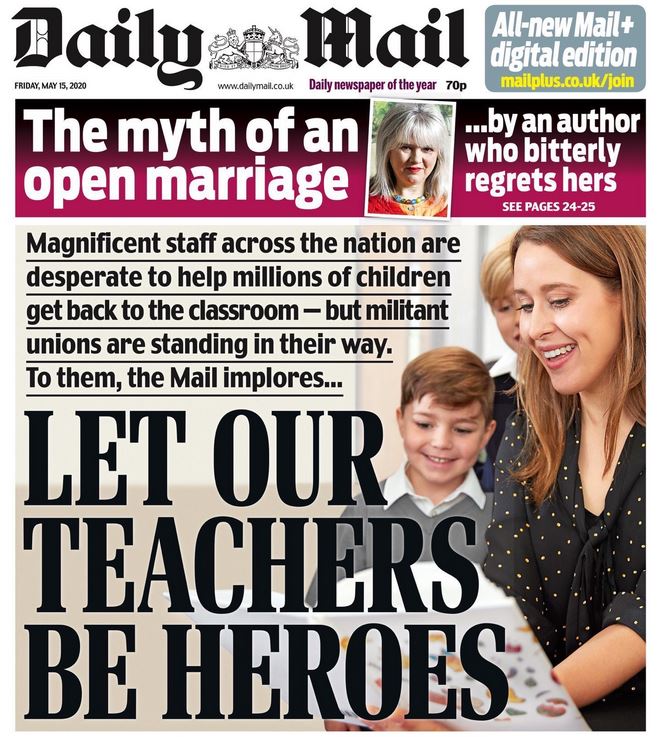


Excellent notes, now add to your case study please.
ReplyDelete24/9/2020
ReplyDeleteTarget: 5, 6 and 8.
See DIRT starter to work through the improvements.
12/10/20
ReplyDeleteWe need to get you started on this question:
Target areas: 1, 2, 3, 4, 5.
Ensure you cover both newspapers use the cultural context point and include theory, use the model in the DIRT feedback to help you start.
4/11/20
ReplyDeleteThorough notes on the theories.
Detailed analysis, try to include in your paragraphs a reference to the theory or theorist so that you are practicing how to integrate this into an exam response.
18/11/20
ReplyDeleteThorough notes and homework completed. I would like to see you moving onto extension tasks to challenge yourself more.
2/12/20
ReplyDeleteTarget: 4- Try to bring in the relevant context areas to discuss that are relevant to the points you are making
11/1/21- Excellent notes, well done, keep it up.
ReplyDelete18/1/2021- thorough research examples and good notes.
ReplyDeleteTarget: Your next step would be to develop the analysis of a particular story from the online platform and link in a theory of your choice from the list provided. Give specific examples from the online article that link to your theory. Barthes and signs of connotation and denotation would be a good start.
20/1/21- Good notes here, well done.
ReplyDelete27/1/21- Good notes here, well done.
ReplyDelete3/2/21- excellent notes, well analysed examples of the contexts applied, well done.
ReplyDelete10/2/21- Good Q1, try to include more terminology to back up your points- close up, low angle etc...
ReplyDeleteQ2- Good link of representation and genre, you now need to zoom in on the media language to show the differences in the papers, font, layout, colour image, lexis etc...
Q3- have a go at this one.
Q4- Good initial points made here, you would need to use some of your examples from your case study work to back up examples of Shirky's ideas and how the online news embodies this. You might also want to add a little more of what Shirky asserts in the theory.